
“I would describe USC’s culture as ambitious, collaborative, and very diverse. There is a strong sense that people are motivated and driven, but at the same time, there are many opportunities to connect across different disciplines, backgrounds, and interests. What stands out to me is the sense of community—students and faculty are serious about their work, but there is also a strong emphasis on supporting one another and building relationships.”
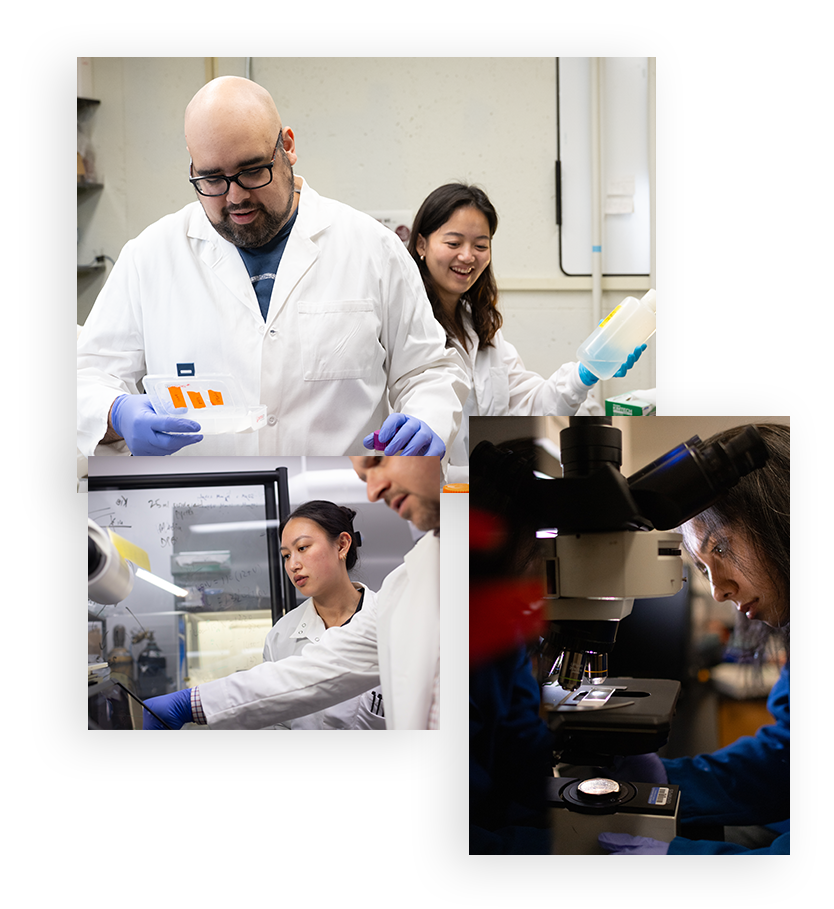
The USC Mann School’s Pharmaceutical & Translational Sciences Program brings together three laboratory-based PhD programs—Clinical and Experimental Therapeutics, Molecular Pharmacology and Toxicology and Pharmaceutical Sciences, promoting a more cohesive interdisciplinary experience advancing education and offering opportunities to sample the entire range of innovative research options.
The doctoral training program prepares students for careers in the pharmaceutical industry, academia and advanced scientific research in a broad range of settings. The training encompasses a unique scientific framework from drug discovery, delivery and development to application of genetics and genomics to experimental and clinical translational research.
Meet Our Faculty
7 Videos
USC Advantages
- Cutting-edge research opportunities covering the entire pharmaceutical continuum
- Top-notch research faculty with interdisciplinary and collaborative projects
- Ample course options provide flexibility to accommodate a variety of research interests
- Opportunity to enroll in a variety of MS programs with no additional tuition
- Strong mentoring, career development and travel support to ensure individual success
Three Unique Tracks
During your first year, you’ll take courses, attend seminars, and rotate through labs across programs. This shared experience encourages collaboration among students and faculty from different disciplines, and gives you time to explore research areas, meet potential mentors, and identify the track you want to pursue.
At the end of your first year, you’ll choose one of the three areas of study listed below. That’s where you’ll focus your research and earn your PhD. Learn more about the PhD curriculum
Accordion Content
The PhD in Molecular Pharmacology and Toxicology program provides training in molecular mechanisms of disease and in disease and drug interactions. Coursework emphasizes molecular pharmacology and the interaction of drugs with cell physiology. Research areas are laboratory-based and include drug design and development, receptor pharmacology, pharmacodynamics, medicinal chemistry, cancer biology and pharmacology, immunology, metabolism and biochemistry, molecular- and neuro-pharmacology, and oxidant and environmental toxicology.
The PhD in Pharmaceutical Sciences program provides training that emphasizes both basic and applied research through advanced coursework in contemporary pharmaceutical sciences. Independent laboratory research areas include drug design, development, targeting and delivery, medicinal chemistry, computational chemistry, pharmaceutics, pharmacokinetics, pharmacodynamics, immunology and molecular and cell biology.
The PhD in Clinical and Experimental Therapeutics program provides cross-training between clinical and basic sciences, focusing on the investigation of disease processes, drug development, and the efficacy and toxicity of therapeutic regimens. Course requirements and research opportunities offer both experimental (basic) and disease-focused experiences. The emphasis in this track is on clinical translational research, using molecular and translational science techniques to address clinically relevant research questions.
How would you describe the culture of USC to someone who has never visited?
Shu-Yi Lin
PhD, Pharmaceutical Sciences '23
Assistant Professor, National Defense Medical University

What inspired you to pursue your degree at USC?
“I chose USC because of the umbrella program. I didn’t have to commit to one specialization right away, I could figure it out based on the labs and PIs I worked with. That flexibility mattered because I wasn’t 100% sure what direction I wanted yet. The program also had real practical perks: funded TA opportunities, and the option to pair it with a regulatory affairs master’s, which ended up shaping my career path. But honestly, the biggest thing was the alumni network, it’s directly how I landed my current job.”
Priyal Dave
PhD in Clinical and Experimental Therapeutics '24, MS in Regulatory Science
Medical Affairs Associate, AVITA Medical
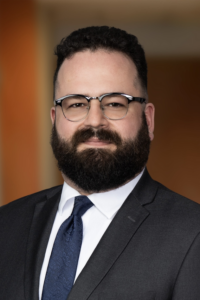
What is your advice to students who are thinking about following in your footsteps by pursuing this degree program?
“My advice is to take full advantage of everything USC has to offer. It is a place where you can conduct top-tier research while also exploring your interests and figuring out who you are and where you want to go professionally. I did not know exactly what career path I would follow when I started the program, but USC gave me the opportunity to explore different avenues, connect with people across disciplines, and discover what worked best for me. Be open to opportunities outside of the path you originally imagined, because those experiences may ultimately help shape your career.”
Samuel Garza
PhD, Molecular Pharmacology and Toxicology; MS, Regulatory Science
Patent Agent, Morgan, Lewis and Bockius LLP

How did your time at the USC Mann School impact you?
“The rigorous training I received through the USC Pharmaceutical Sciences PhD program equipped me with a strong foundation in natural product chemistry, microbial genetics and analytical chemistry. This comprehensive background has proven invaluable in my research on unraveling the molecular mechanisms underlying microbe-host interactions.”
Chun-Jun (CJ) Guo
PhD Pharmaceutical Sciences '14
Assistant Professor, Weill Cornell Graduate School of Medical Sciences

Why did you choose USC Mann?
“One of the appealing factors that sold me was the famous USC alumni network, the focus on translational science at various levels, and the option to earn a masters in either regulatory science or drug development. Taken together I believe they contribute to making me more competitive in the job market after my PhD.”
Hugo Avila
PhD Pharmaceutical and Translational Sciences ’21
Senior Advisor, Eli Lilly and Company
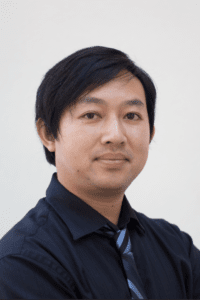
What inspired you to pursue a PharmD/PhD at USC?
“I only applied to pharmacy schools that advertised a dual degree program; plus USC is the number-one private pharmacy school in the country. While it was a struggle to take PharmD and PhD classes at the same time, the School’s dual degree program allowed me to complete my clinical and research training two years faster than if I had pursued the degrees separately.”
Anh Truong
PharmD ’17, PhD Molecular Pharmacology and Toxicology ’21
Field Application Scientist at Agilent Technologies
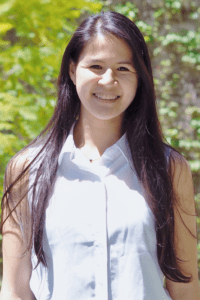
Why was USC a good fit for you?
“USC was a good fit for me because it had provided me with opportunities to develop necessary scientific skills and grow a professional network for a postgrad career in the pharmaceutical industry.”