


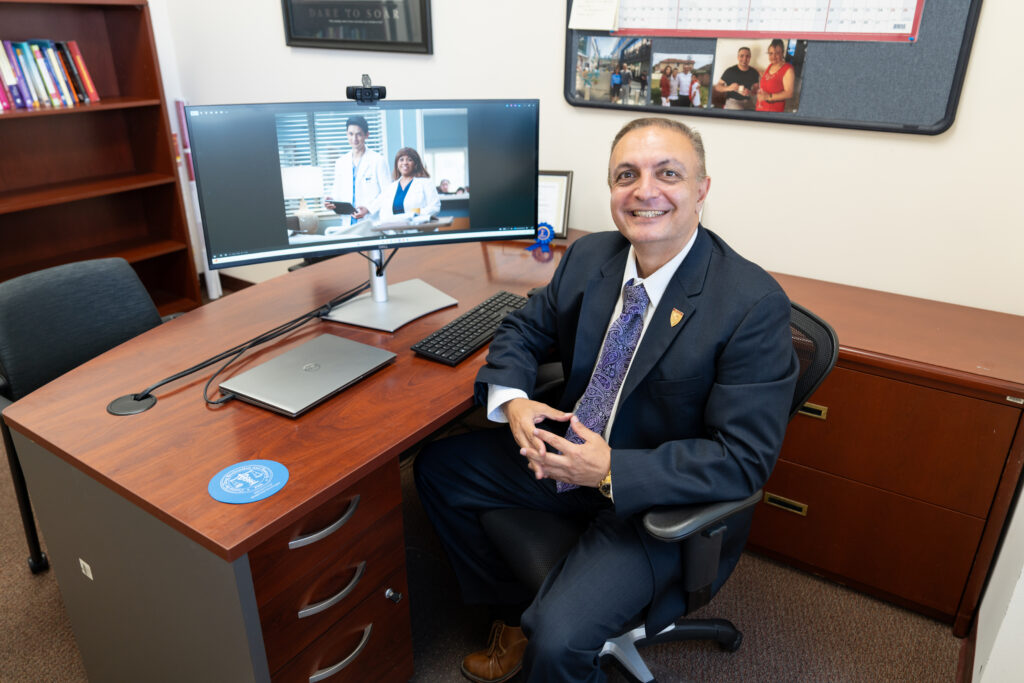
When the writers for the ABC medical drama Grey’s Anatomy needed guidance on the regulations governing experimental treatments, they turned to the USC Mann School and Tony Succar.
Succar, assistant professor and director of USC Mann’s MS in Clinical Trial Management program, served as an expert consultant on a story spanning four episodes during Season 22 of the nation’s longest-running medical drama. The episodes originally aired from late March to early May 2026.
The connection came through Hollywood, Health & Society, a program of the USC Annenberg Norman Lear Center, which provides the entertainment industry with accurate and up-to-date information for storylines on health, safety and security. After the show’s writers reached out, the inquiry made its way to the Southern California Clinical and Translational Science Institute, where Succar serves as associate director of the Regulatory Knowledge and Support core.
“It was my first time consulting for a TV show,” Succar said. “I was very excited because of the impact we can have. We’re there to educate the public about research, clinical trials and regulations.”
So he met over Zoom with more than 10 of the show’s writers to answer questions about FDA approval processes, expanded access—sometimes called compassionate use—and the regulations governing investigational medical devices. Expanded access is a regulatory pathway allowing patients with serious or life-threatening conditions to receive investigational medical products outside of clinical trials.
“We want to make sure that the public sees accurate information that’s close to real-world scenarios and that it’s not just completely made up,” Succar said.
The writers also asked about the consequences a physician might face for using an unapproved treatment, a core aspect of the storyline they were crafting.
One part of the process was new to the show’s staff. “We also need IRB approval as well,” Succar told them, referring to the institutional review boards that oversee research ethics. “That opened up whole new possibilities for the writers,” he noted.
Succar is ideally positioned to advise on such issues. While training new generations of clinical research leaders at USC, he is also a widely published researcher and expert on clinical trial design, regulatory strategy, compliance and more. Recently, he won first place at the Association of Clinical Research Professionals Conference for his research poster: “AI-Driven Transformation: Shaping the Future of Clinical Trial Design, Conduct and Operations.”
For Succar, helping shape a storyline on one of television’s most enduring medical dramas provided an opportunity to help viewers better understand how clinical research works and the safeguards designed to protect patients. He sees storytelling as a way to repair confidence in the field.
“In the past in clinical trials, there have been some catastrophes with human health, and because of that, there was a lot of mistrust within the general community,” he said. “Thankfully, now, because of our very stringent regulations, much less mistrust is happening.”
Succar emphasized, “I want to continue to build on that trust—to say that, yes, clinical trials are done under rigorous regulations, which are safe and ethical.”
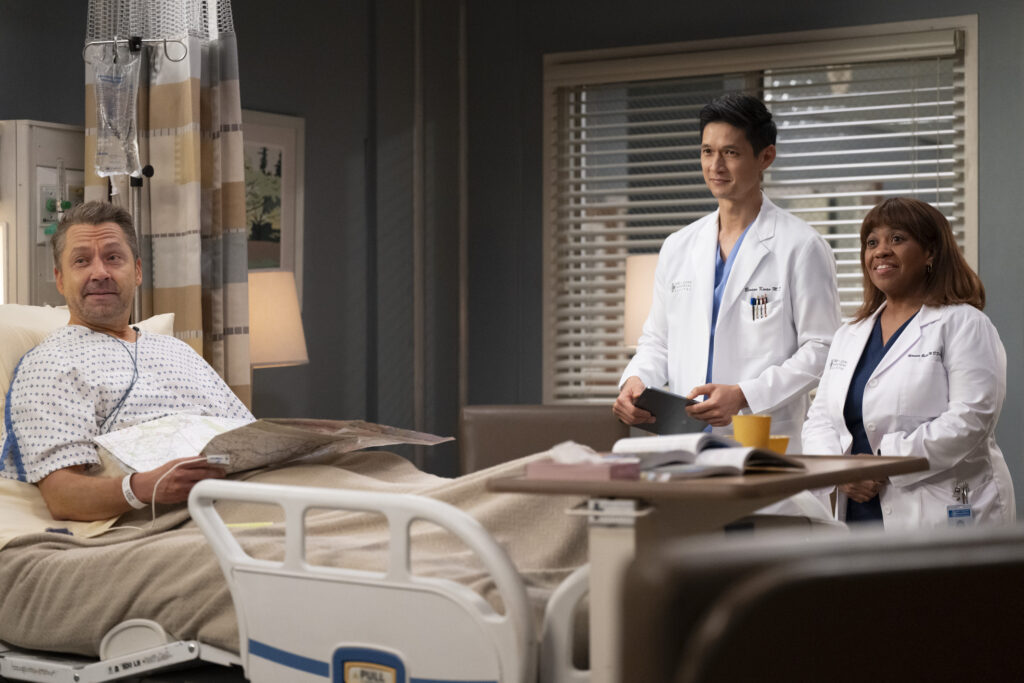
The storyline Succar consulted on can be watched in four episodes of Season 22 of Grey’s Anatomy: “Take Me to the River” (episode 15, aired March 26, 2026); “Feel it Still” (episode 16, aired April 2, 2026); “Through the Fire” (episode 17, aired April 30, 2026); and “Bridge Over Troubled Water” (episode 18, aired May 7, 2026).